Say Hi — Designing for Neighbourhood Connection.
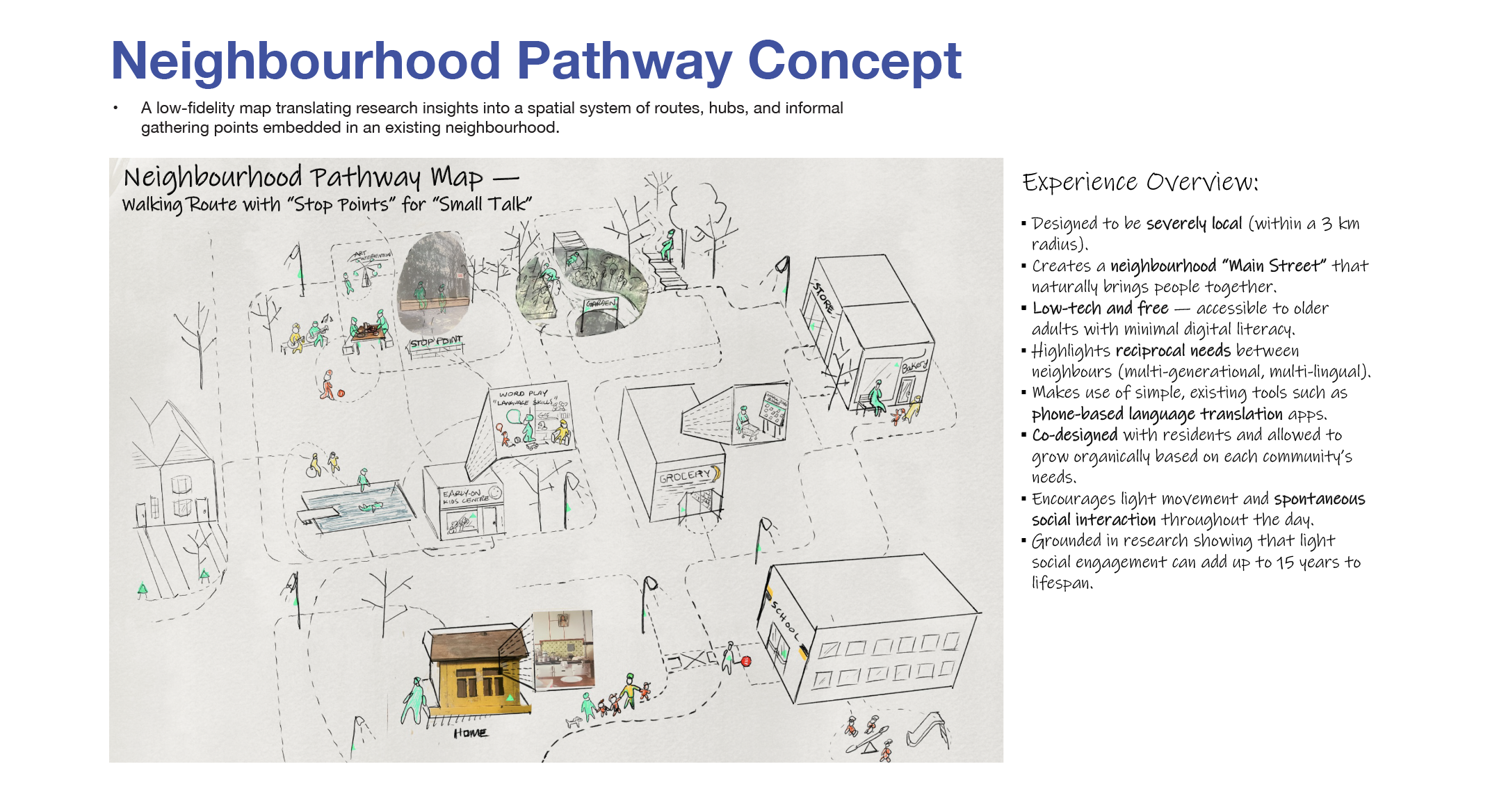
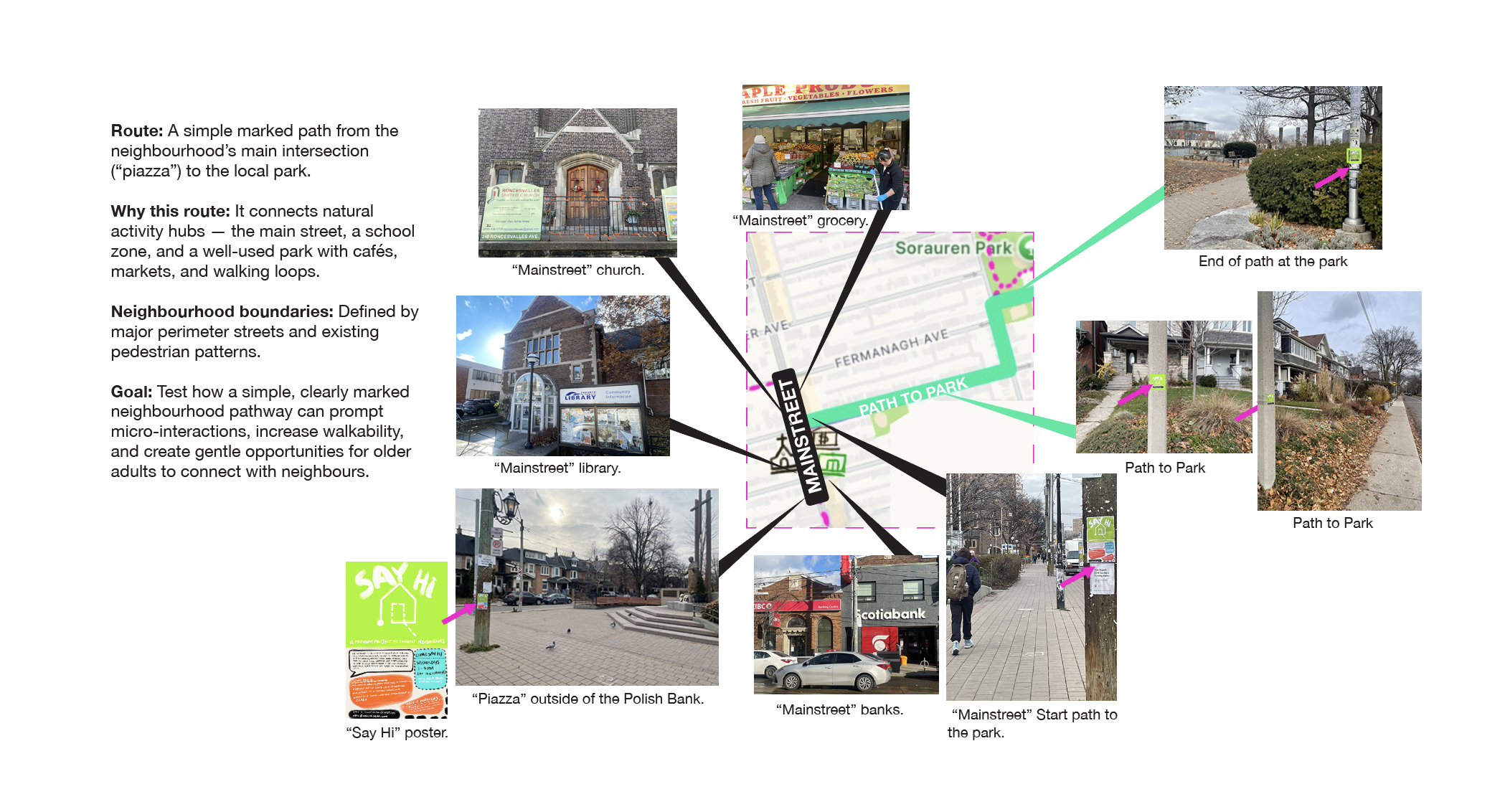
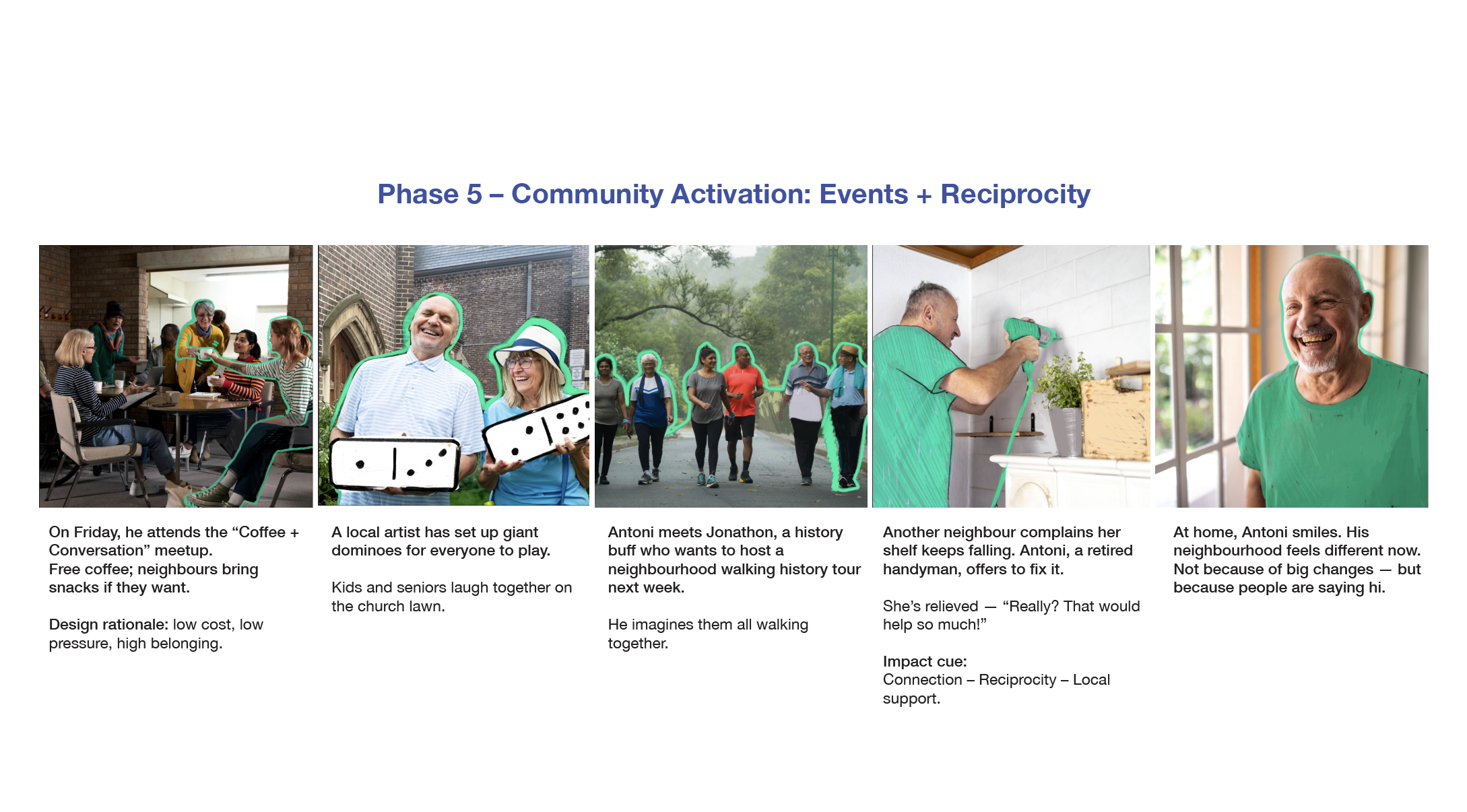
I designed and tested a low-tech, hyper-local neighbourhood activation to support older immigrant adults in staying socially connected and physically active. Grounded in human-centred design research, the project reimagines everyday walking as a social infrastructure through marked paths, informal gathering points, and lightweight tools like pins, signage, and offline translation devices. Through in-person prototyping, interviews, and street-level testing, the work demonstrates how small, unstructured interactions—“just saying hi”—can build trust, reduce isolation, and turn neighbourhoods into living ecosystems of movement, contribution, and care.
Point of View Statement
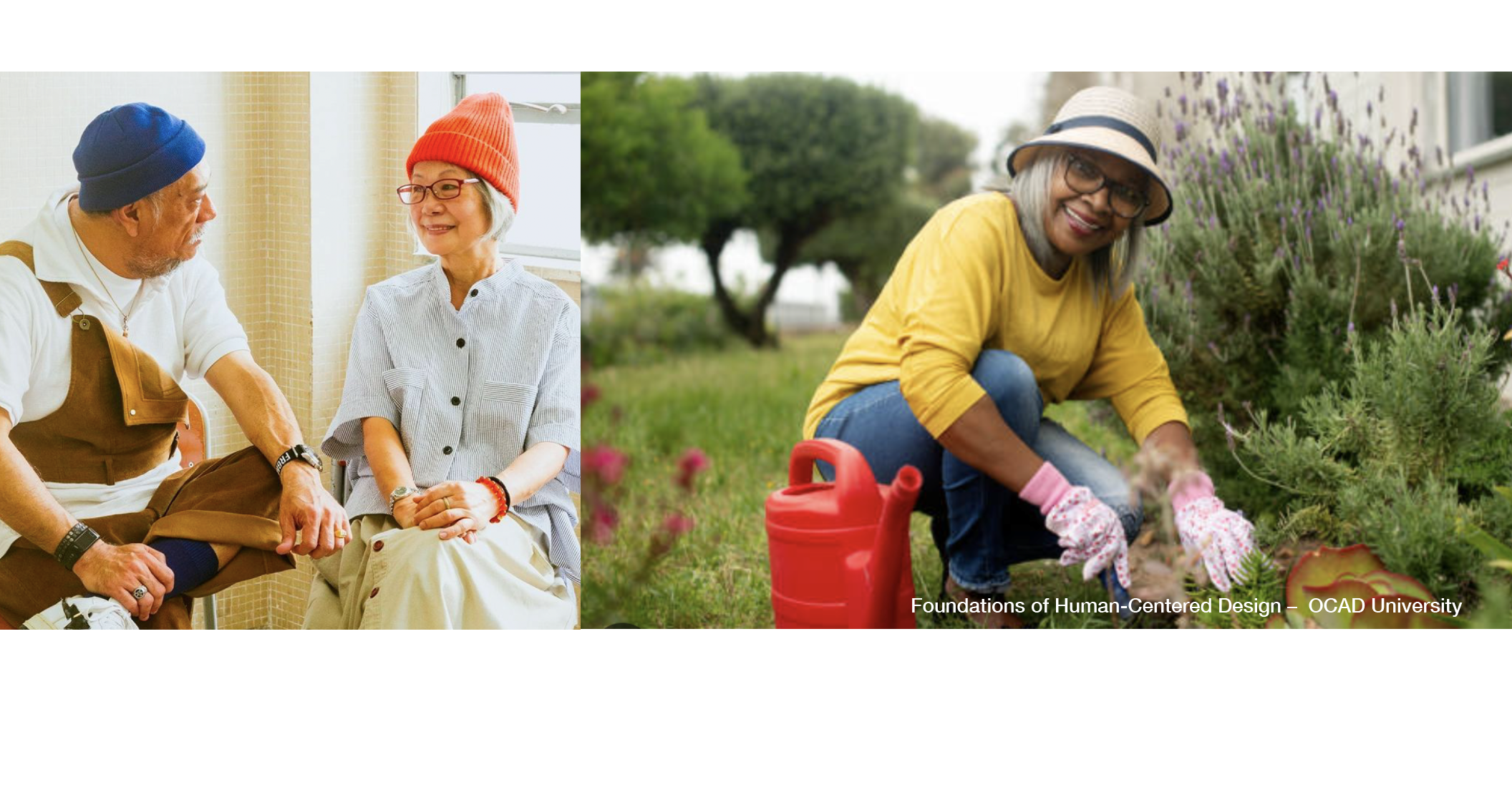
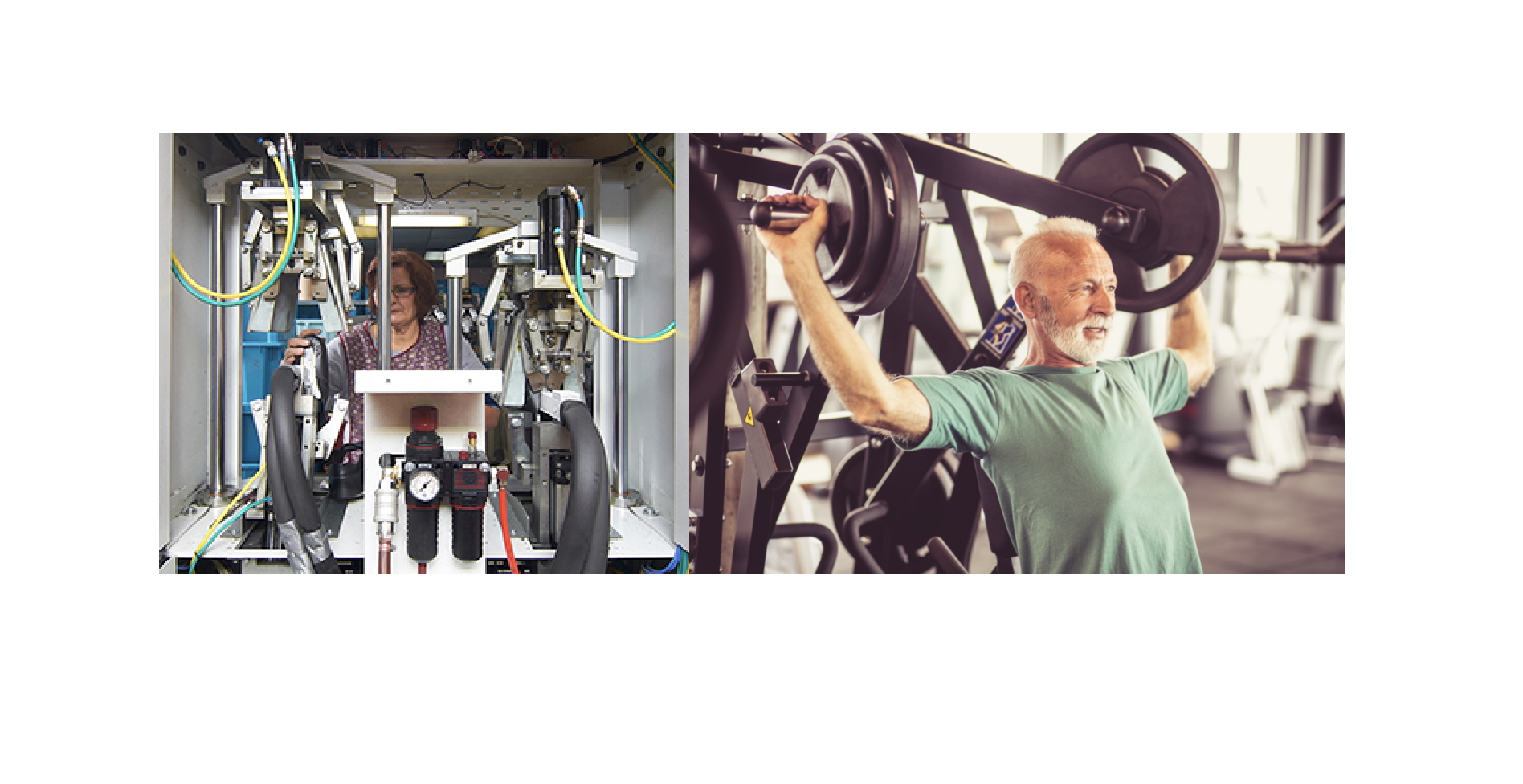
Older adults, especially those from immigrant backgrounds or physically demanding careers need a way to stay active through familiar, meaningful, and culturally relevant activities, so that they can maintain their health, independence, and sense of purpose, without relying on intimidating or unfamiliar fitness programs.
Synthesizing Research Themes
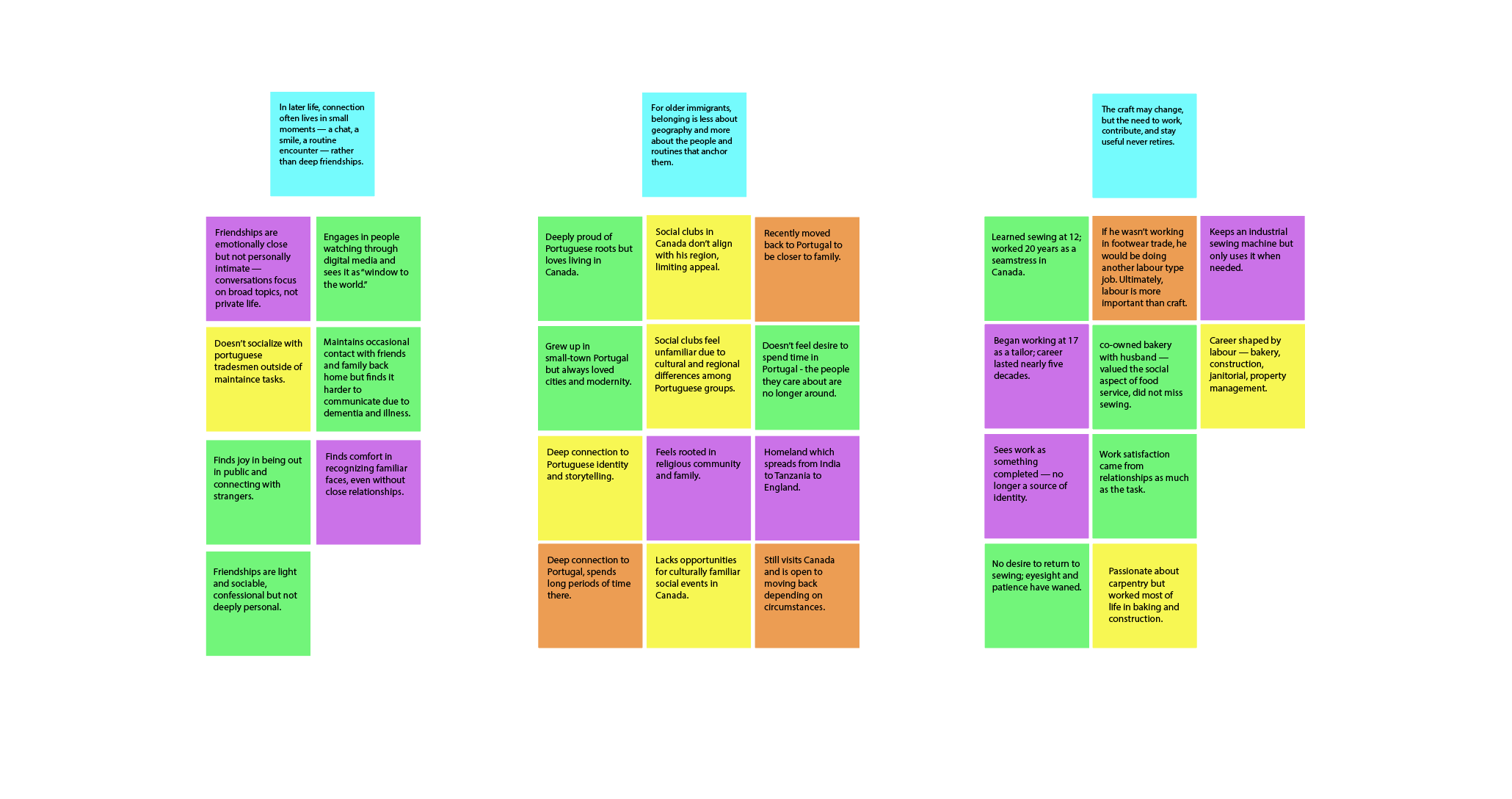
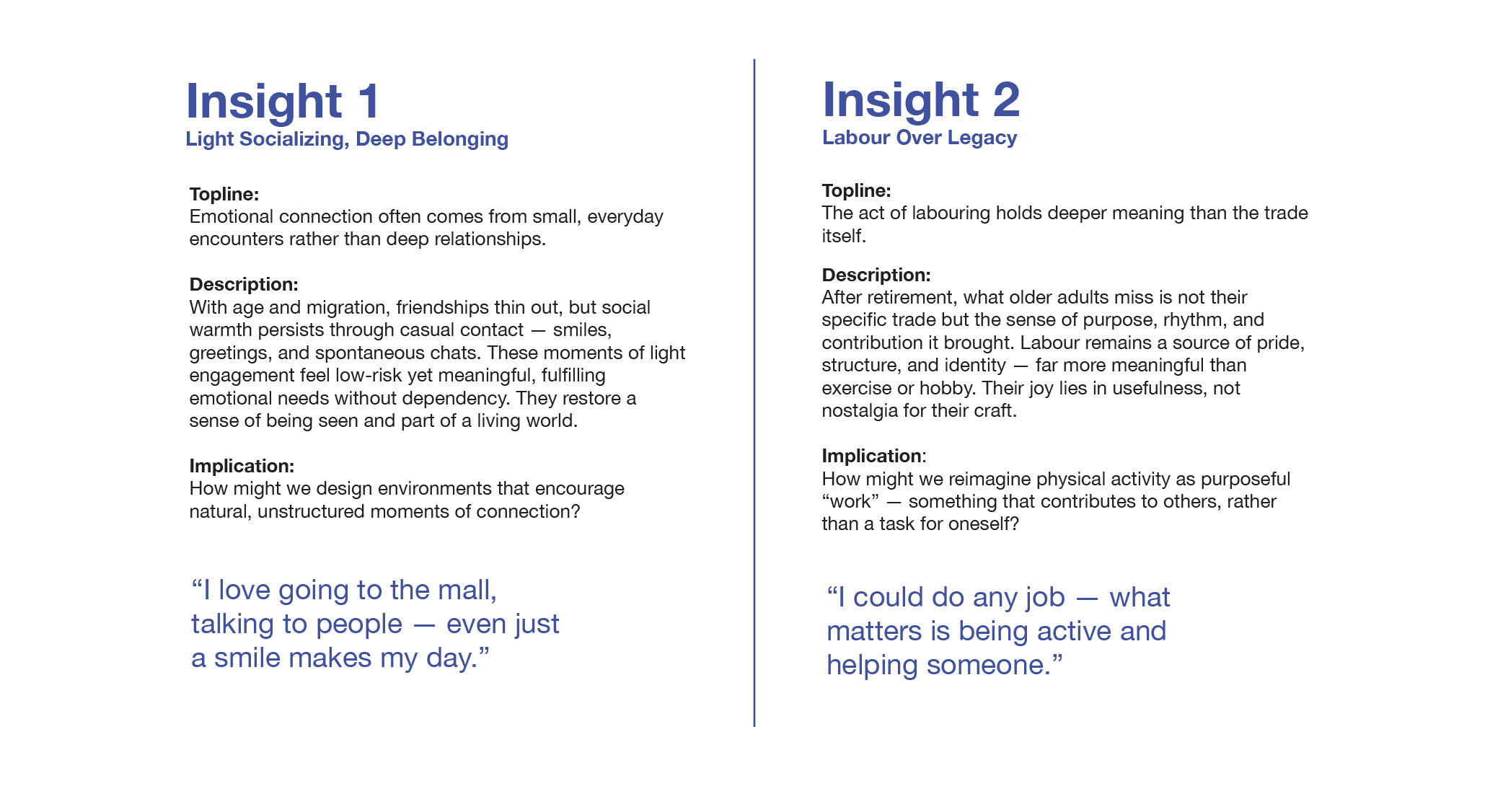
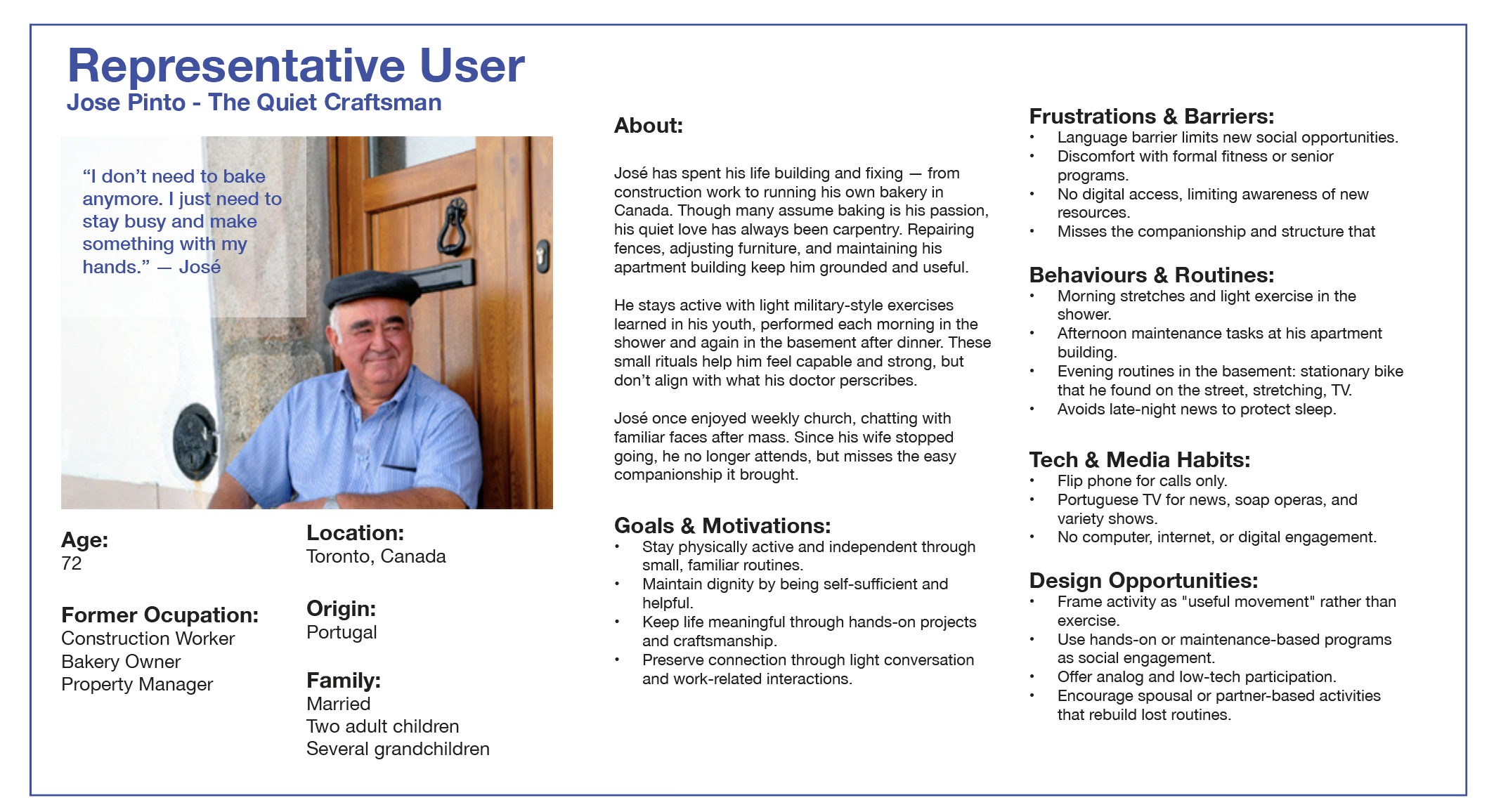
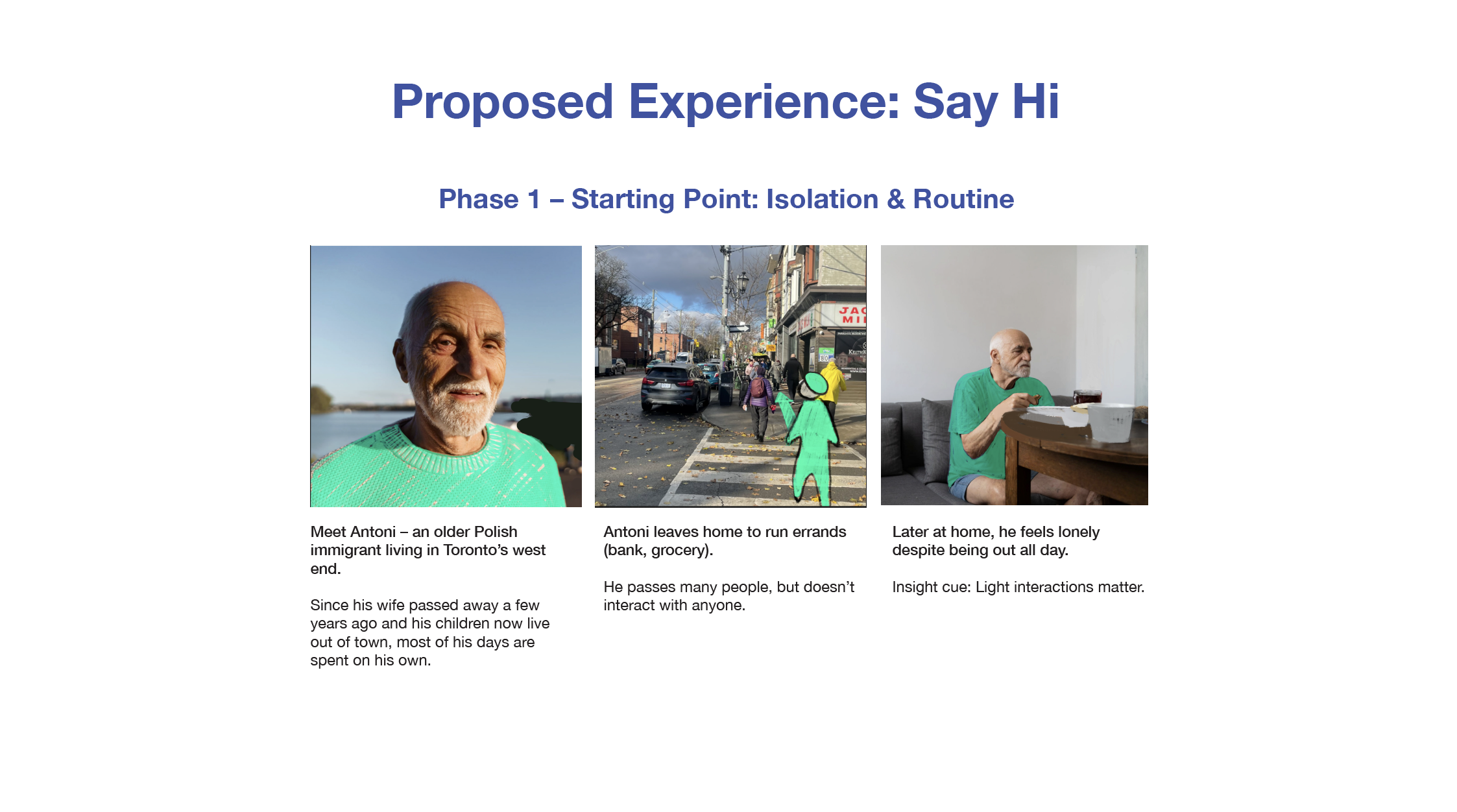
Interview notes and field observations were clustered to surface recurring patterns around movement, autonomy, language confidence, and light social interaction. This synthesis revealed that informal, self-directed activity—not structured programs—was central to how older immigrant adults stay connected and well.
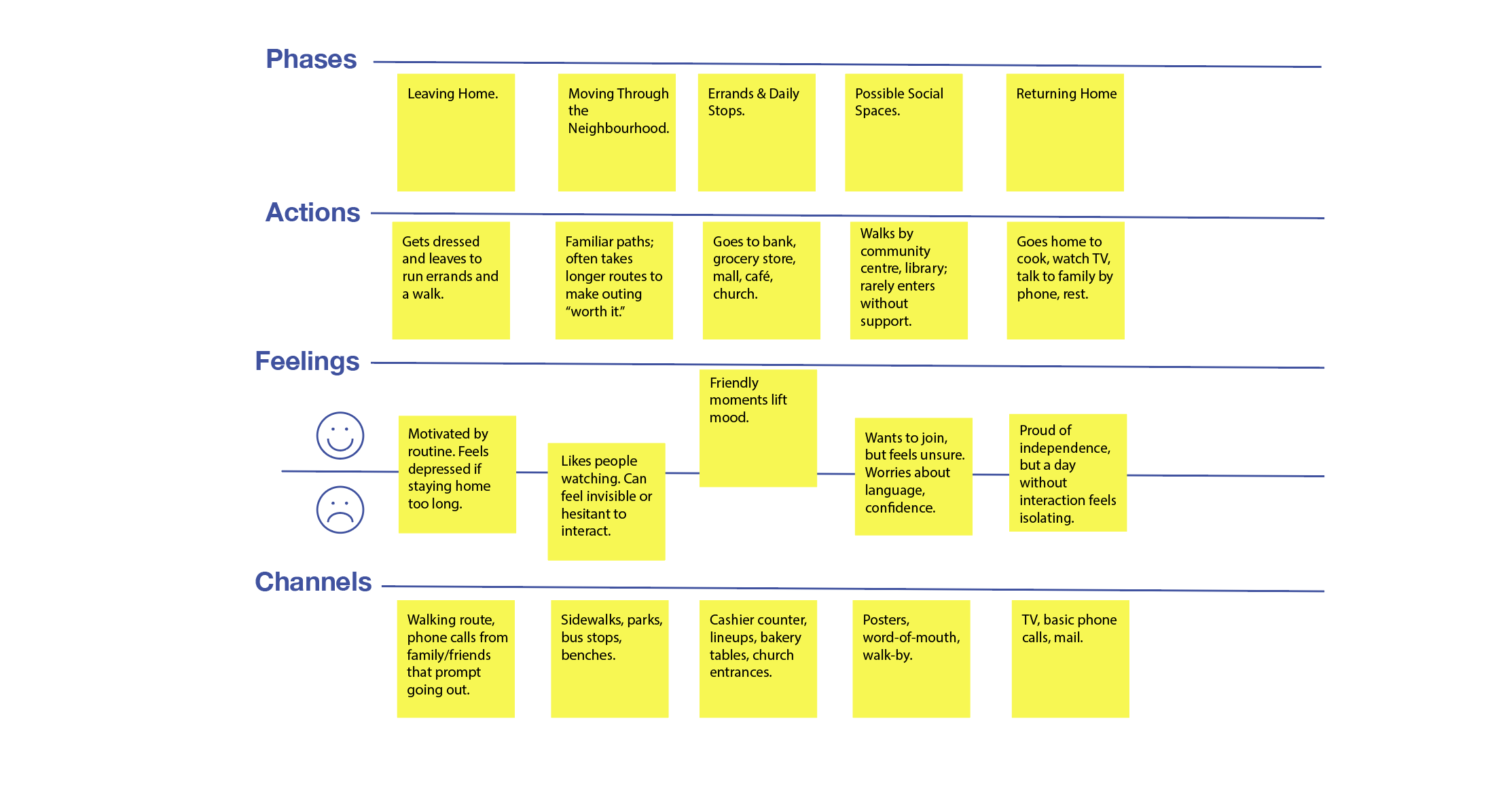
Journey Map – Prompt to Move
This journey map traces how an older immigrant adult moves from isolation to connection over the course of a typical day. Mapping actions, emotions, and touchpoints helped identify where small prompts—signage, social cues, and informal invitations—could naturally encourage movement and interaction without disrupting existing routines.
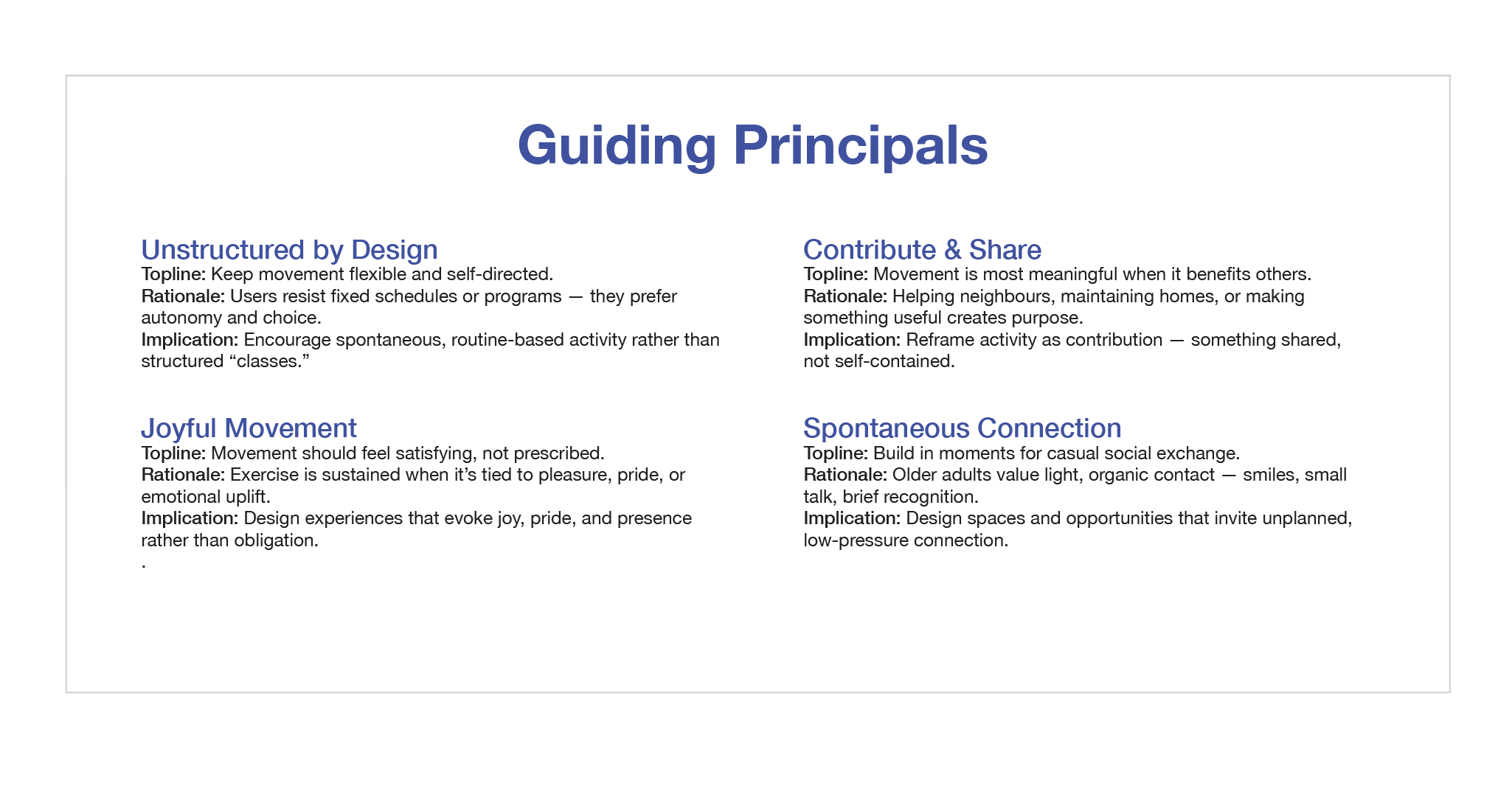
Design Opportunities
How might we make everyday movement feel joyful and culturally familiar rather than like “exercise”?
How might we spark spontaneous social connection through shared movement or small acts of contribution?
How might we design movement experiences that respect autonomy while gently guiding consistency?
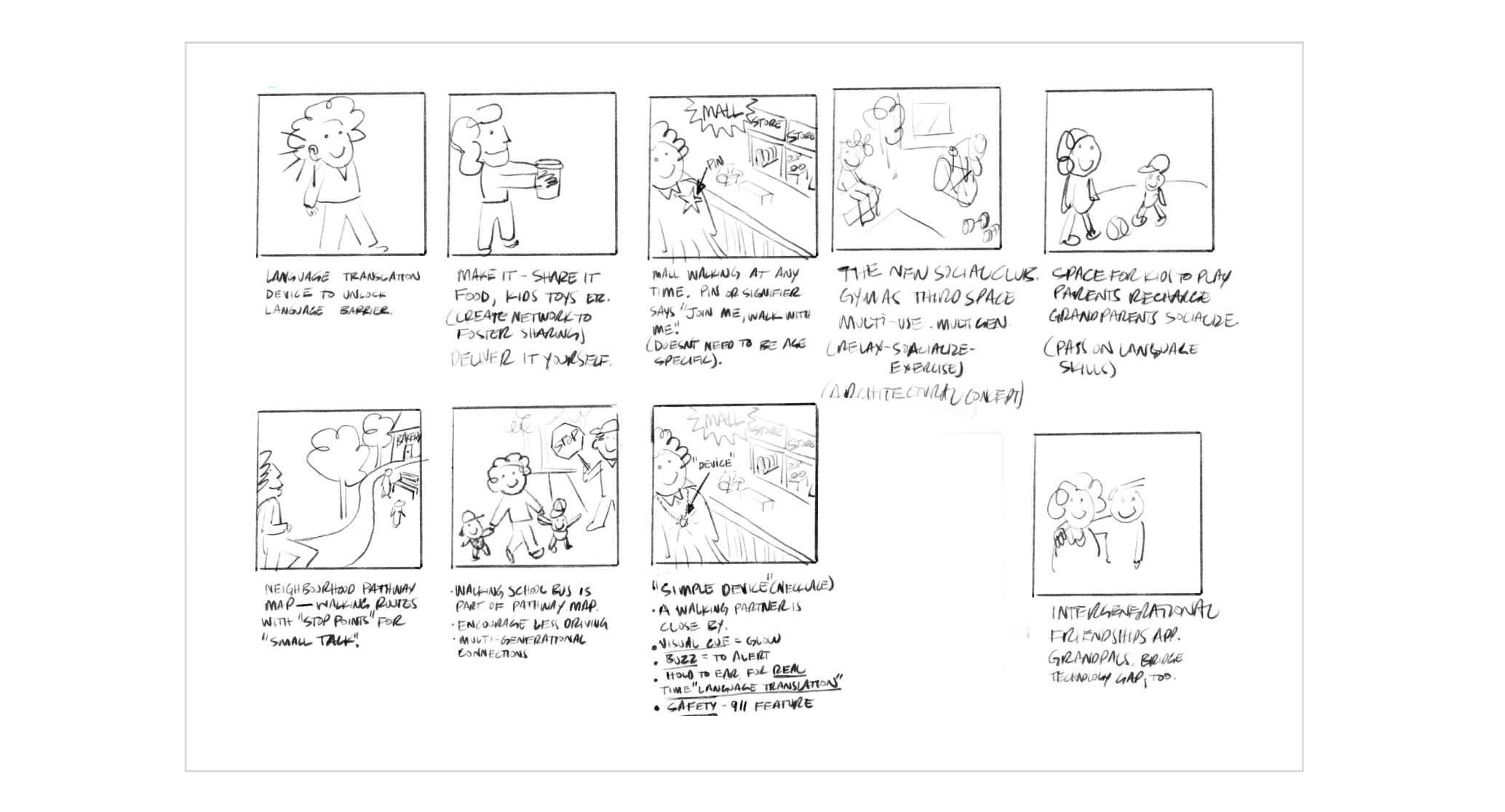
Early Concept Exploration
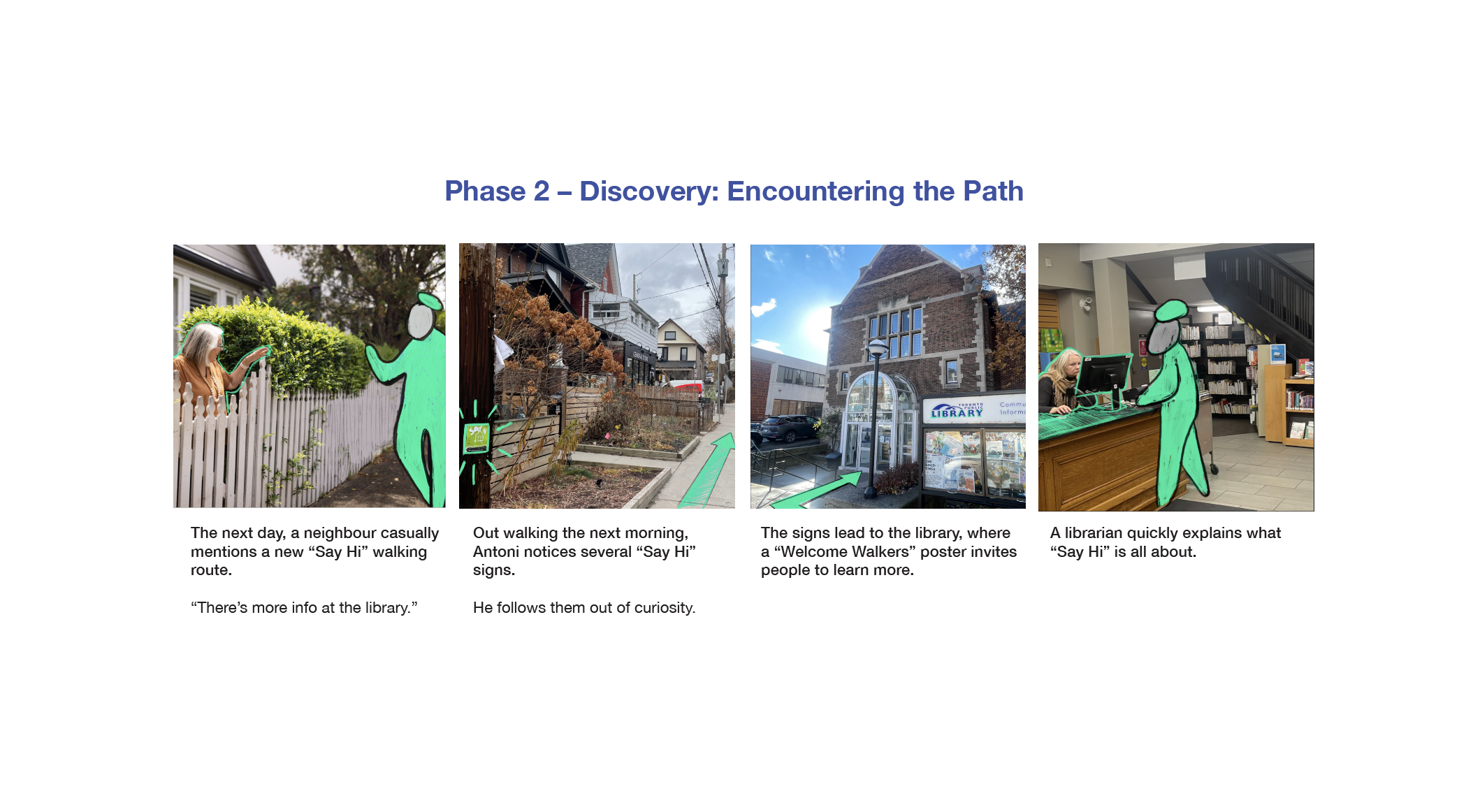
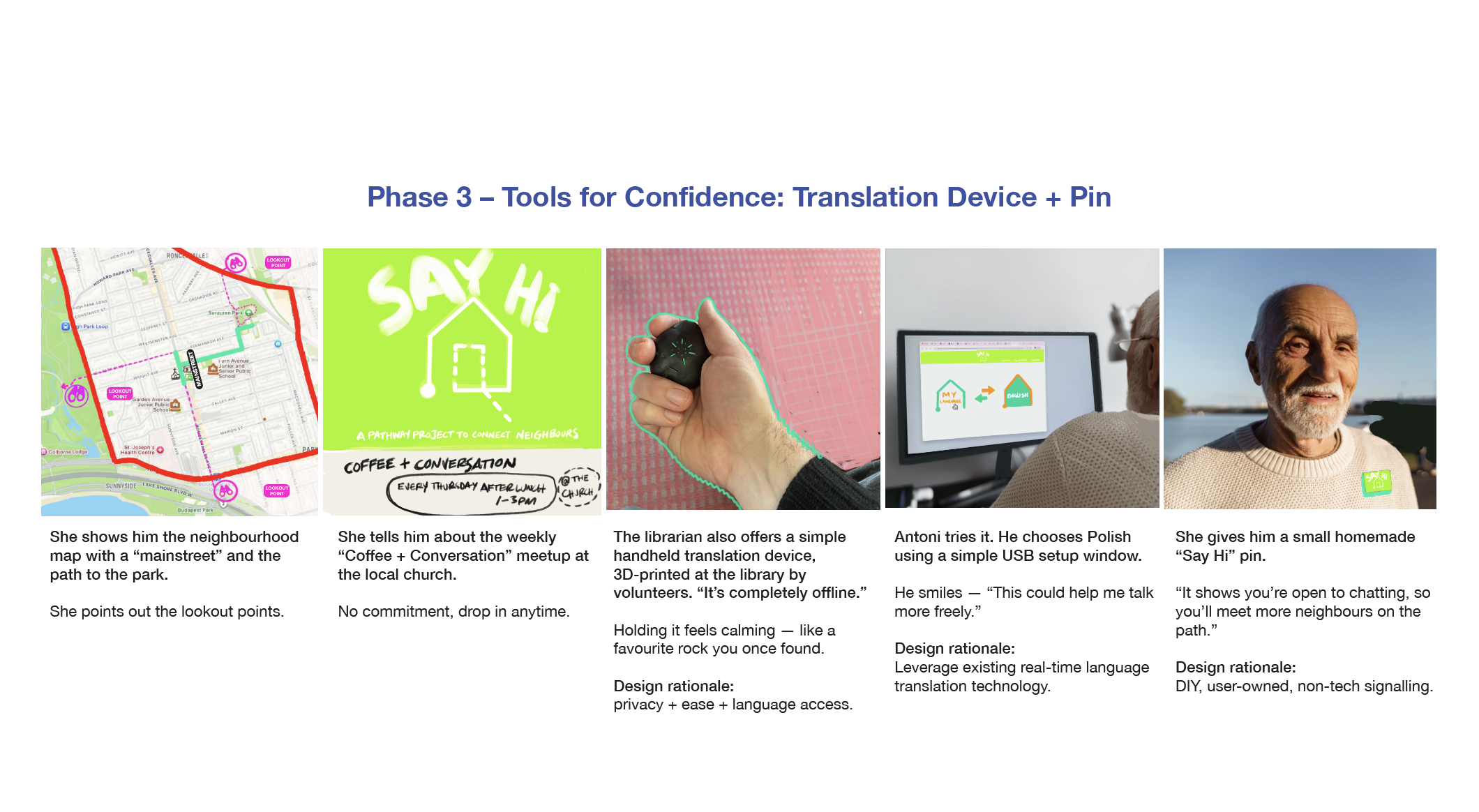
Rapid sketches exploring how walking, signage, and informal social cues could prompt movement and connection without formal programming.
Street-Level Prototyping
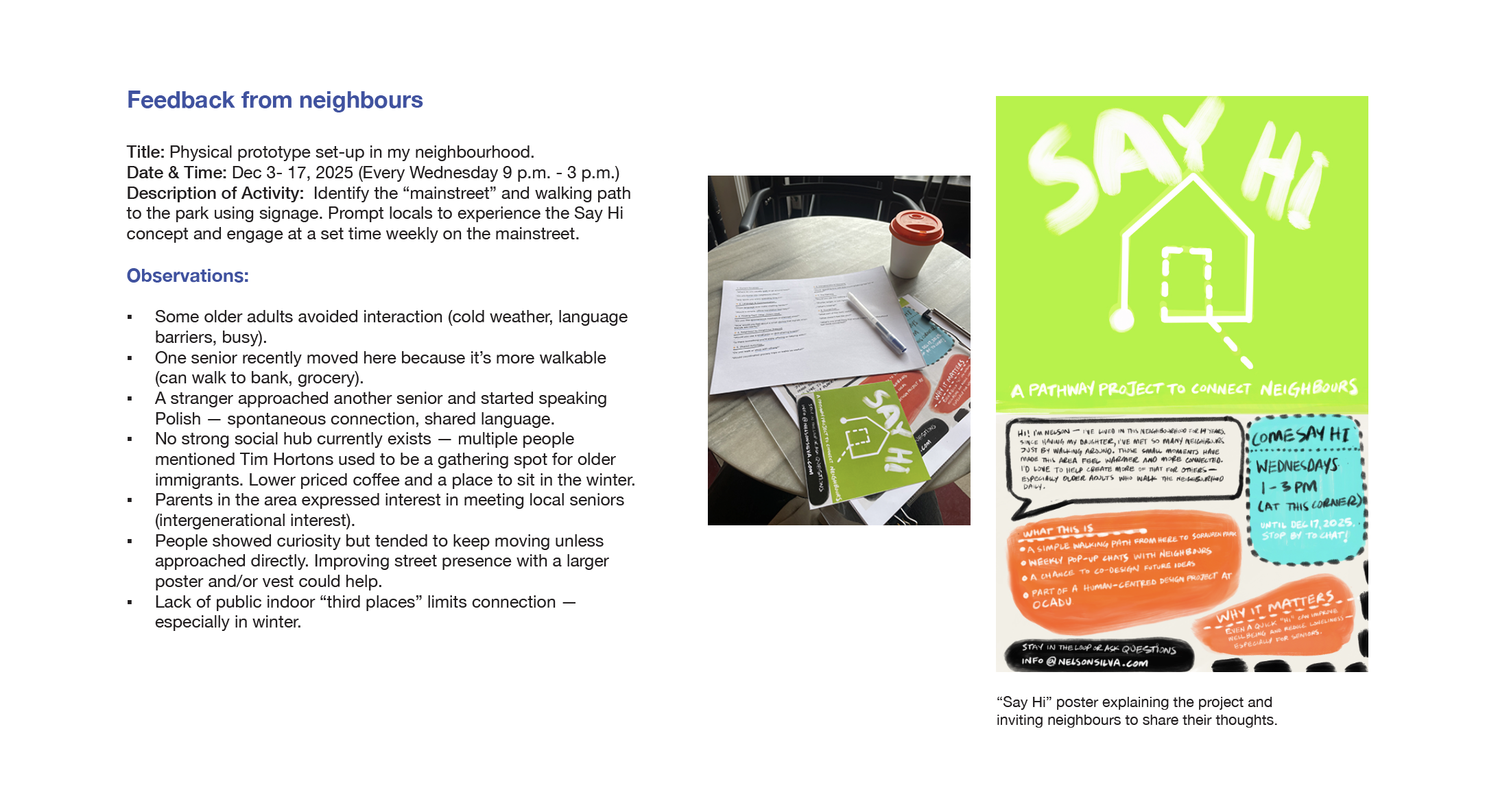
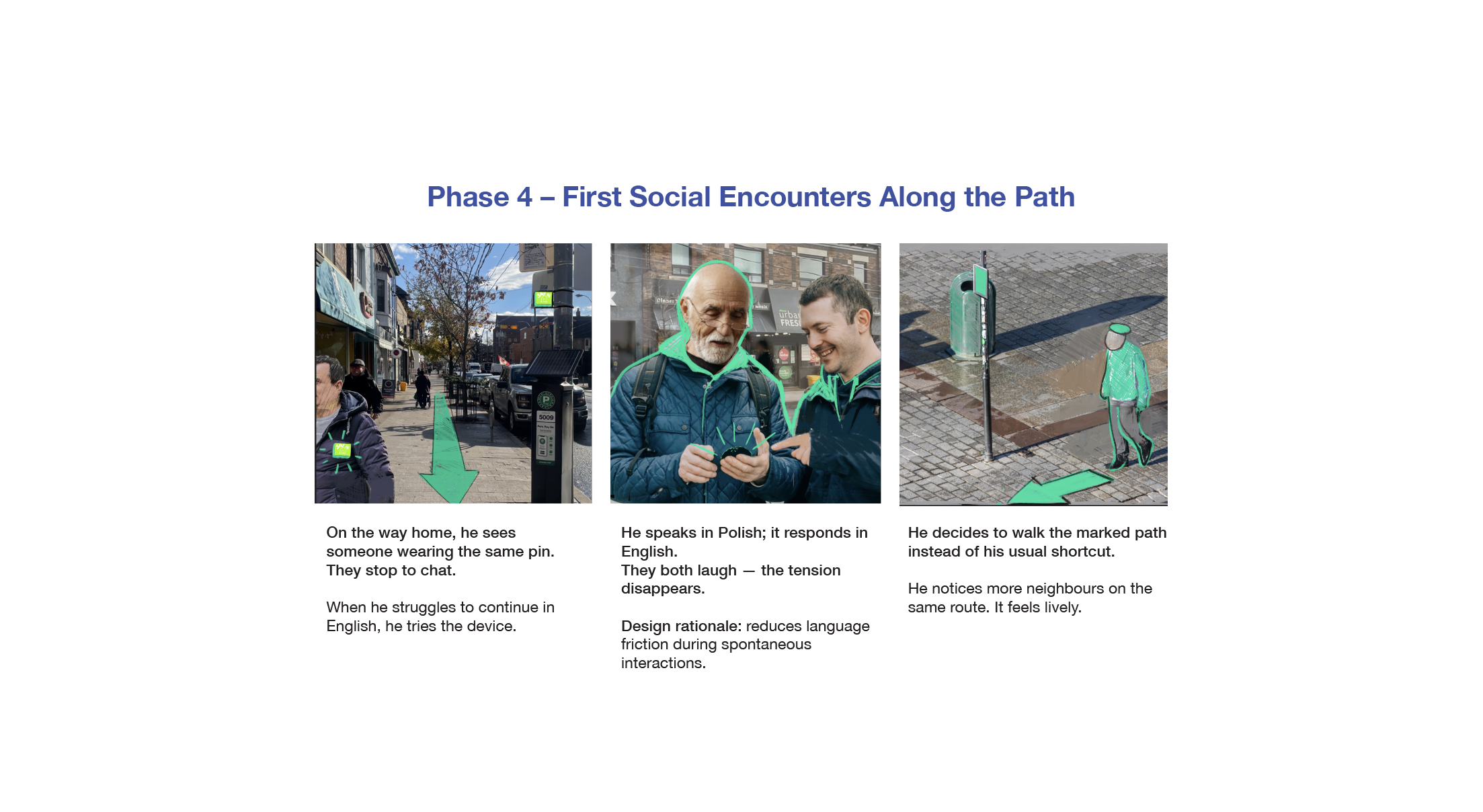
Posters, conversations, and lightweight interventions tested with neighbours.
Reflection
This project reshaped my understanding of social connection in later life—from something to be designed and programmed into something that must remain light, optional, and self-directed. Through street-level testing, I learned that the most impactful interventions are not polished tools but predictable places, gentle nudges, and environments that reduce hesitation to say hi. Moving forward, the work invites deeper research into how these pathways scale across different neighbourhood densities, how winter and indoor spaces can support the same warmth, and how communities can co-design their own versions over time.